


On Aug. 12, 2025, Youth Today published an article discussing how extremely competitive culture in youth sports often leads to burnout. In the story, a variety of high school students explained how the sports they once loved became a source of stress and pressure. Seventeen- year-old Marian Jimenez, a swimmer attending Back of the Yards College Preparatory in Chicago, expressed how the stress her swim team caused her made her consider quitting the sport altogether.
Participating in sports throughout one’s youth and in high school presents young athletes with opportunities to gain a variety of skillsets outside of athletics. They can strengthen leadership and communication skills in addition to team and competition skills. However, as a society we often focus most on wins and losses, instead of honoring the other abilities individuals can gain from playing sports.
Competition can motivate kids to give their best efforts and play well, but by high school the push to win tends to become more intense. When competition culture becomes too extreme, it shifts focus away from the lifelong skills and personal growth sports provide, and can create an overwhelming amount of pressure that can damage student athletes’ well-being.
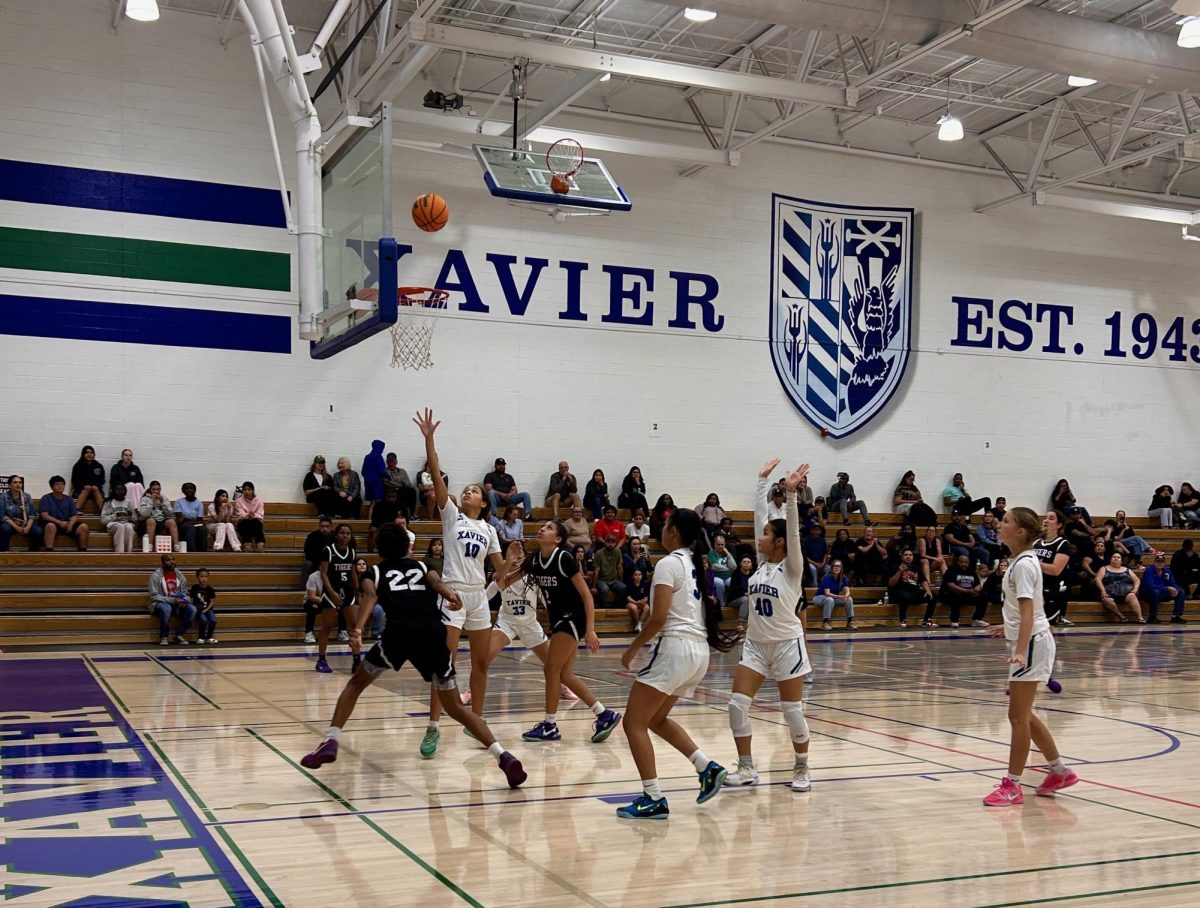
At Xavier, our community is known to be uplifting and supportive, while also being very competitive. Nearly every Gator sports team competes at the highest level, and brings home state championship titles frequently.
With this level of performance, many student athletes face a significant amount of pressure. “For a lot of girls, playing a sport is their everything,” said varsity softball coach Sydnie Steffen. “We try to do a good job of balancing competition while making sure the girl’s mental health is cared for.”
Our school community has a sense of sisterhood and support that allows for this balance. While many girls compete at elite levels and face stress, Xavier’s community strives to be encouraging no matter what the outcome of a game may be.
Xavier has incredibly supportive fans at every game, administration and staff that help set up rallies to highlight sports teams and a tight-knit community that is constantly congratulating each other and uplifting one another.
However, Xavier is not entirely exempt from student athletes dealing with possible issues due to competition culture, because sadly, no school is.
All athletes will have to deal with performance-driven culture. Whether it is coming from their communities or pressure they feel from themselves to compete well, athletes feel it is there.
By placing less emphasis on winning, we as a society can help young athletes focus on growth and the lifelong skills sports are supposed to develop, instead of tying self-worth to the score of a game.
“As coaches and athletic departments, we have to do a better job of showing that playing a sport and being on a team is about more than just winning,” said athletic director Tui Selvaratnam.
Administrators and coaches play a crucial role in encouraging athletes in positive ways, and the Xavier faculty do a great job of motivating student athletes by uplifting them. Making sure young individuals know they are more than just their sports and how they performed during a game is incredibly important.
Xavier softball coaches often “remind the girls that they are more than just their sport,” said Steffen. She described the importance of making sure athletes know they are still loved and valued despite how well they play.
Selvartanam explains that while competition culture can become too extreme and hurt athletes, it can also make them better if balanced correctly. It does not have to come with extreme pressures or stress.
The sense of sisterhood Xavier has built allows for an environment where competition and community can coexist, but this balance can be hard to maintain.
Xavier is home to many elite high school athletes who continue to play their sports in college and even go on to play professionally. This makes keeping the balance of competition and well-being especially important.
It makes it possible for young athletes to pursue excellence at a high level while feeling supported and valued.
“We have to make sure the competition aspect doesn’t take over the community element of Xavier,” said vice principal of activities and athletics Sister Lynn Winsor.
This need for balance applies to schools everywhere.
We need to recognize and make changes to competition culture. We need to protect young athletes and ensure they can gain all the skills sports can provide without the overwhelming pressure.