

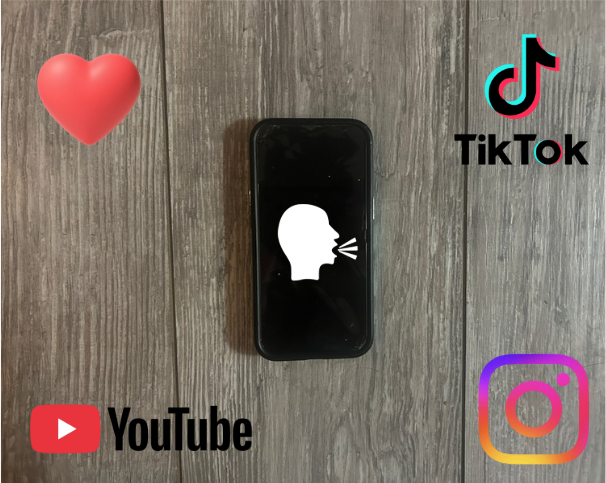
A student’s social media activity is increasingly affecting her academic performance, mental health and future opportunities.
As platforms such as Instagram and Tiktok become more integrated into daily routines, concerns are growing about digital footprints, procrastination and comparison culture.
Nationwide, social media influences how students focus in school, how success is viewed and how students plan for college. A major problem though, according to social media coordinator Zachary Carlson is that posts made in high school can resurface, even years later.
“One of the biggest risks is that students often treat social media as temporary or private, when in reality it creates a lasting digital footprint,” Carlson said.
Carlson said posts, comments, likes and screenshots can be saved and shared beyond their intended audience. He explained that colleges and employers increasingly review applicants’ online presence to evaluate character and judgment.
“A student’s online presence is far more permanent than many realize,” Carlson said. “Even deleted posts can exist through screenshots, archived pages or stored platform data.”
Carlson adds that many colleges, businesses and athletic programs now assign staff members to review recruits’ social media accounts. Content involving bullying, inappropriate language or questionable behavior can raise red flags during admissions or hiring decisions.
Brooke Gillespie ’26, who posts “Get Ready With Me” videos on TikTok and helps manage executive and student council Instagram accounts, said she is intentional about what she shares online.
“I have always been a vigilant person when it comes to posting on social media, a value that my parents have instilled in me since I first downloaded social media,” Gillespie said. “Before posting on social media, I always think to myself, ‘Is it kind, respectful, or being a bad example?’”
Gillespie said she avoids sharing overly personal information and considers how her posts may reflect on her in the future.
“As I’m applying and getting accepted into colleges, I think back to all the previous TikTok and Instagram accounts/posts, and I can say I’m confident in what I’ve posted and what I have decided wasn’t appropriate for masses of people to see,” Gillespie said. “Digital footprint is talked about greatly in today’s time, because it is something that employers do truly look at, and could cost someone a job, which is why I take it so seriously.”
Carlson said that constant engagement with social media can train the brain to seek immediate stimulation, making it harder to focus on sustained tasks such as studying or completing long-term projects. He explained that this pattern can reduce productivity and academic performance.
Senior Chloe Cundiff ’26 shared a similar perspective, saying social media has also shaped how she views success and comparison.
“I think when I was younger, I definitely would compare myself to others, specifically with soccer, and I think it made me question whether I was good enough or successful,” Cundiff said. “Social media tends to create a false sense of what success is, and I think it definitely caused me to doubt myself when I was younger.”
Cundiff said social media can create a facade that does not reflect real-life relationships.
“For me, I often notice people will be super-present online, but when it comes to in-person socialization they are reserved,” Cundiff said. “Many people are much more concerned with how many followers or likes they have versus how many true friendships. Social media can create a false facade and it is super easy to fall into this trap.”
Cundiff also said, though, that social media can provide helpful guidance for students preparing for college.
“I think it has helped my readiness as I love watching TikToks of ‘what to do and get ready’ for college, and things that people wish they knew before being a freshman in college,” Cundiff said.
Carlson said students can protect themselves by thinking carefully before posting and regularly reviewing old content. He advises students to assume that nothing online is ever completely private.
As social media continues to shape how students communicate, compare and present themselves, its influence now extends far beyond the screen, following them into classrooms, college admissions and the future workforce.