



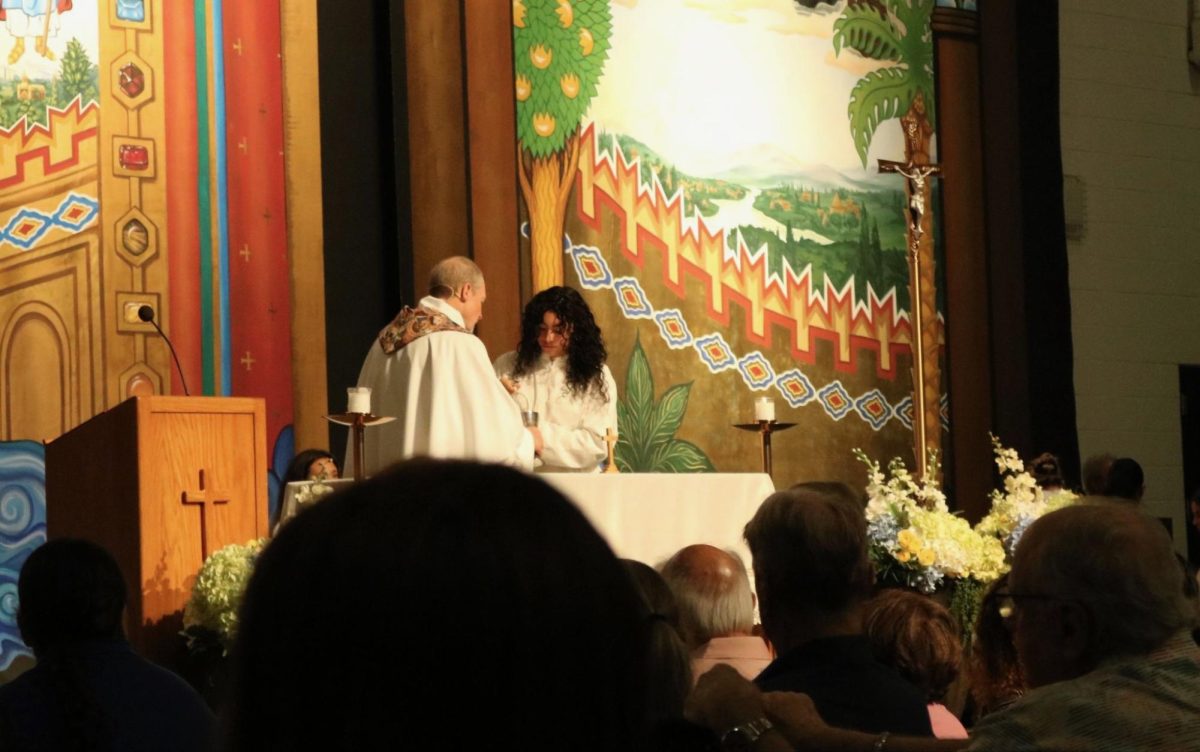
There is more to Mass than just the traditional priest and deacon. Behind the scenes and before a community, Eucharistic ministers come to serve.
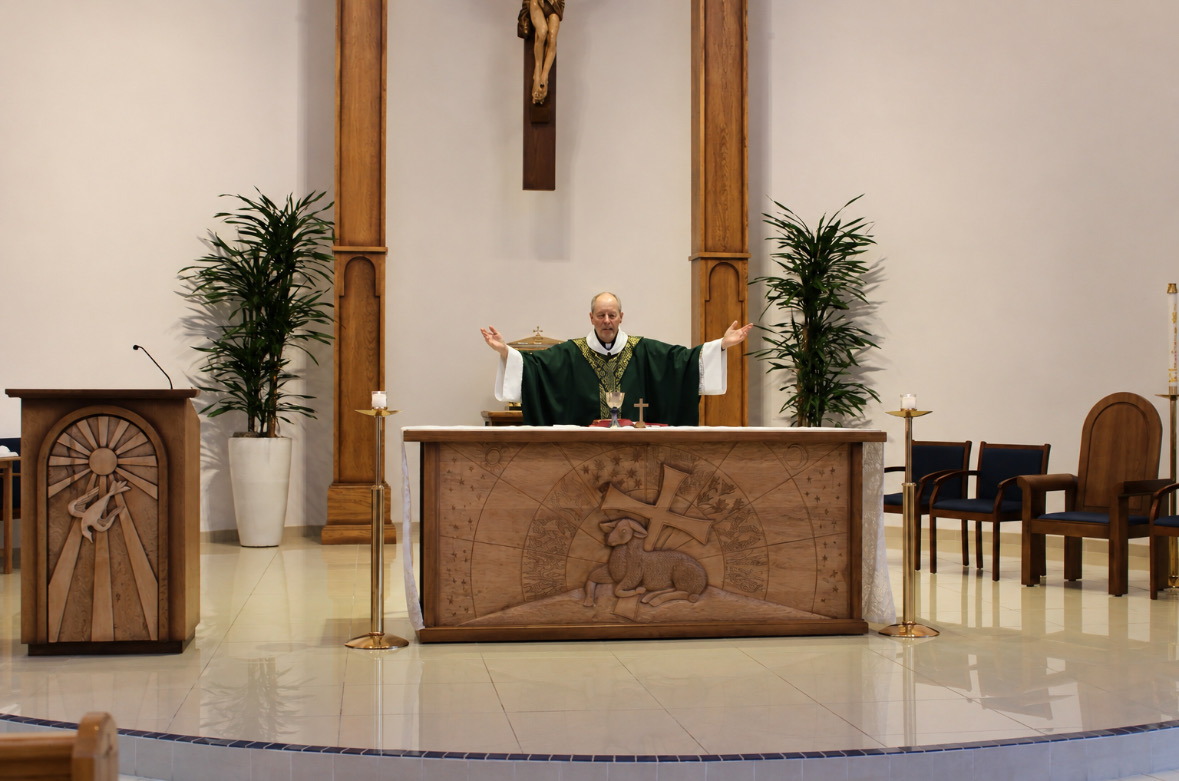
To be a Eucharistic minister is to have a sense of reverence. In the words of Father Chris Cartwright, “What I am doing is I am giving people the body and blood of Christ. This is God and this is sacred. I want it to be a holy moment for that person who is receiving and for me.”
A long lineage of strong leaders in the campus ministry department have cultivated students of interest with mentorship and counsel, from Sister Joan Fitzgerald to Danielle Lambert ‘09.
The process of becoming a Eucharistic minister was not always straightforward. Now, with Lambert as the lead, ease and clarity have been achieved.
“The process now is simple. At the end of the school year, I send an email to the junior class. It’s a Google form that tells them the requirements and asks them if they would like to be a Eucharistic minister,” said Lambert.
Choosing the applicants is difficult because of the amount of people who apply at the end of junior year. “Approximately 50 girls are interested each year,” Lambert added.
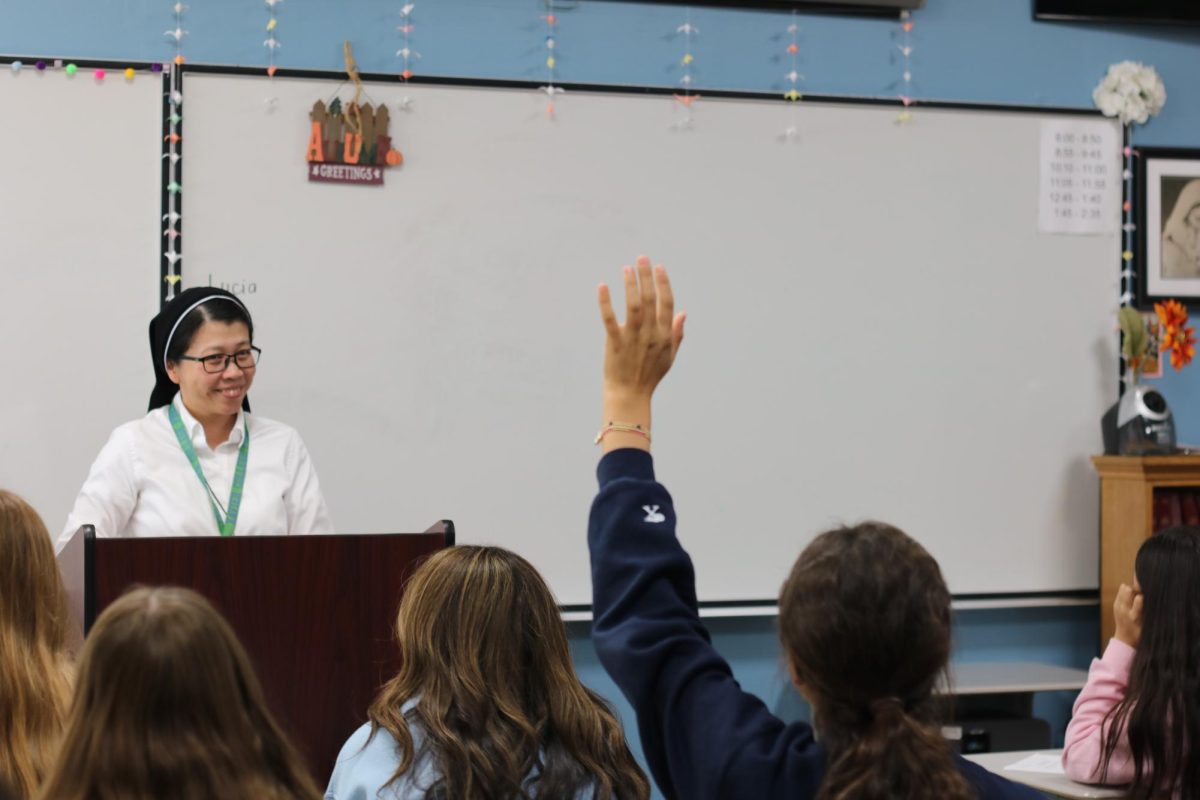
In order to prepare, the Eucharistic ministers have a session on Friday after school for about an hour. Here, Lambert speaks about God and tells the girls they are “vessels for Him,” said Maddie Kaiser ‘27. Kaiser has been involved in Eucharistic ministry since her freshman year at her church and now at Xavier.
Lambert focuses on teaching the girls how to present themselves and what they should say to the recipients.
To attain the position of a Eucharistic minister for the full year, the girls need to attend daily Mass twice a month. On the day of all-school Mass, the Eucharistic ministers meet at 7 a.m. to go through the routine, which includes practice, bearing gifts and questions.
Usually at the first back-to-school Mass, the new Eucharistic ministers meet Lambert afterward to ask questions and raise concerns.
The qualities and thoughts that must be brought to this prominent role include being in “the right head space with God and connected to Him before bringing love to anyone else,” Kaiser said.
It is understood that when doing this job there has to be “a sense of doing something sacred and careful. There is no casualness and forgetting about what you are doing,” said Cartwright.
Kaiser added, “It’s not about yourself, it’s about Him.”
Contrasted with other churches outside of the Xavier community, there are slight differences in how a Eucharistic minister is to serve and who is to serve. “The age groups are about the same, but in some parishes the volunteers who do it are grandparents,” Cartwright said. The Xavier community gives the students who are called to be Eucharistic ministers an opportunity to be servants of Christ.
When a Eucharistic minister has the willingness to serve for Christ, she is described as feeling honored and privileged to give the sacred love that Jesus did at the Last Supper to others.
In the future, the hope is that the Eucharistic minister who volunteers at Xavier will continue to give the same way that Jesus did on his last night. John the Baptist’s counsel toward the way to look at sacred privileges is shown through his words: “I must decrease, He must increase,” said Cartwright.