



From professional lighting equipment to digital editing softwares, Xavier’s photography program provides students with tools to explore different styles and develop their skills. However, the program focuses on more than just having access to the latest technology.
For the past 15 years, Xavier’s photography teacher, Julianne Averbuck ‘07, has helped students discover their own perspectives while teaching them the skills behind photography.
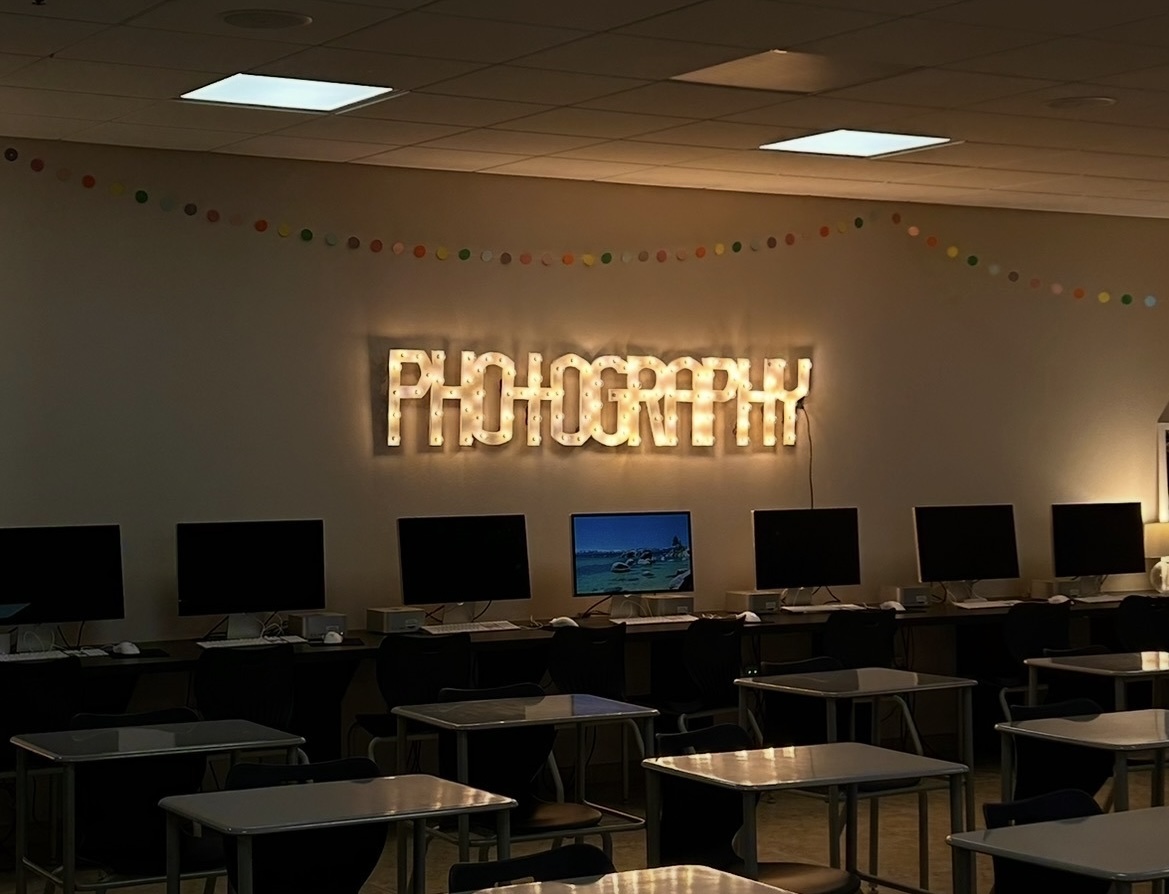
Students have access to a classroom equipped with Mac computers and Adobe programs, including Photoshop and Lightroom. These programs allow students to edit their photographs, experiment with different effects and develop their final projects.
Photoshop is used extensively in Beginning Photography, while Lightroom is also used for editing and scanning film photographs. Students can bring their own digital cameras or rent equipment from class.
Beginning Photography students primarily work with Canon Rebel cameras. As students advance, they can also access about six different camera types, giving them opportunities to experiment with different equipment.
The classroom also includes a professional lighting studio. Students can work with flashes, strobes, attached flashes and other studio lighting equipment to explore how different lighting techniques affect their photographs.
Through these tools, students learn how different lighting techniques can change the mood and appearance of a photograph.
Although the rooms provide students with modern digital equipment, Averbuck emphasizes the importance of understanding the camera itself. “I really like to teach the students to shoot manually,” she said.
Shooting manually teaches students how to adjust their own camera settings and understand how each decision affects the final photograph. By experimenting with lights, focus and exposure, students will gain experience and learn how to make their own choices behind every photo.
“The class teaches students how to compose photographs, use lighting and frame different subjects, including portraits, scenes and movement. Students can express themselves through photographs” said Asha Patel ‘27, president of the Photography Club.
Patel describes her experience as “low stress and fulfilling to the soul.” The class gives students a greater appreciation for photography as an art form.
Emily Patterson ‘27, vice president of the club, shares a different aspect about her experience. “The part I love about photography is capturing moments with my friends.”
Averbuck encourages students to approach photography with individuality rather than trying to make every photo look the same. “I really want people to be able to use their creativity,” she said.
As photography technology continues to change, Adobe programs regularly introduce new features, including artificial intelligence tools. However, Averbuck believes students should understand the editing process before relying on newer technology.
Students are not allowed to use AI in any way in class. Instead, they are expected to make their own decisions and develop their personal artistic styles.
The photography program has also experienced major changes throughout the years. When Averbuck first began teaching, students worked with traditional film photography and learned how to process photographs in a darkroom.
She taught film photography and darkroom processing for six years before the program eventually transitioned to digital photography. Although the equipment and technology have changed, the importance of creativity and learning essentials have remained.
Today, students can explore traditional photography through film scanning equipment in the classroom. Toward the end of the semester, they can also use a large-format printer to create physical copies of their photographs. Students can use all kinds of equipment and resources
to develop skills in composition, lighting, editing and visual storytelling while discovering their individual artistic voices.
For Averbuck, one of the most rewarding parts of the class is seeing students develop an interest in something she has loved throughout her own life. “It’s like a happy surprise because you can pass it on to the next generation,” she said.
Although technology has changed since Averbuck first began teaching, her goal remains the same: encouraging students to develop their creativity and find their own style through photography.