



Xavier’s Founder’s Hall is filled with the unzipping of lunch bags, plastic containers snapping open and salads being shaken in preparation for the perfect healthy meal. A bagged salad, maybe some celery or carrot sticks; foods tossed into a lunchbox, without a second thought. But should one give it a second thought? Could that second thought save someone a bathroom trip, or a few?
This summer, something microscopic turned those wonderful bagged salads into the center of a national food safety scare. After thousands became ill during a Cyclospora outbreak linked to iceberg lettuce, that once-mindless bite of salad began to carry a much bigger question: How safe is the produce in our lunches?
The U.S. Food and Drug Administration reported in its investigation of the 2026 outbreak that illnesses were linked to iceberg lettuce from Taylor Farms, in Mexico. As of Aug. 27, the Centers for Disease Control and Prevention reported 11,458 illnesses across 20 states, including 495 hospitalizations.
But what exactly caused a harmless piece of lettuce to make thousands of people sick?
According to the FDA’s “Cyclospora” food safety guide, Cyclospora is a microscopic parasite that can contaminate food or water and cause an intestinal illness called cyclosporiasis. Unlike E. coli, which is a bacterium, Cyclospora is a protozoan parasite.
Xavier biology teacher Sarah Schimpp explained that the problem can begin before the produce ever reaches a grocery store.
“Really, it’s fecal matter and things that can get into the wastewater or into the fresh water that you’re using to irrigate,” Schimpp said.
Johns Hopkins Bloomberg School of Public Health reported in “Understanding the Cyclosporiasis Outbreak” that the parasite creates a difficult food safety problem because it can survive in soil and water for extended periods of time. Additionally, sanitizing methods used on produce, including chlorine, may be ineffective against Cyclospora.
The contamination that occurs in cultivation means lettuce itself is not necessarily the problem. Where the produce is grown, the water used to irrigate and wash it and how it is handled can all play a role in contamination.
Foods and nutrition teacher Lexie Rinaldi explained that another concern with lettuce and other fresh produce is simple: We usually eat it raw.
“Anything that’s not cooked is susceptible to any of this,” Rinaldi said. “Lettuce is close to the ground, but it’s also not typically cooked.”
That vulnerability is not limited to lettuce. Berries and other produce eaten raw can also become contaminated, leaving consumers with an uncomfortable question: If avoiding lettuce does not completely solve the problem, what exactly are we supposed to eat?
For coach Jennifer Liebl, a Xavier PE teacher and nutrition coach, the answer is not to abandon the produce aisle.
“I was scared for a while too, but not anymore,” Liebl said.
For students who remain concerned, Liebl suggested incorporating more cooked vegetables rather than eliminating vegetables altogether.
Liebl mentioned that consumers have been overwhelmed by the amount of information surrounding recalls. She has also noticed people shifting away from bagged salads and grocery store produce toward locally grown options.
However, local does not automatically mean risk-free.
Schimpp explained that contamination can still happen on smaller farms. Differences in water sources, handling and the scale at which food is produced can all affect the potential spread of contamination.
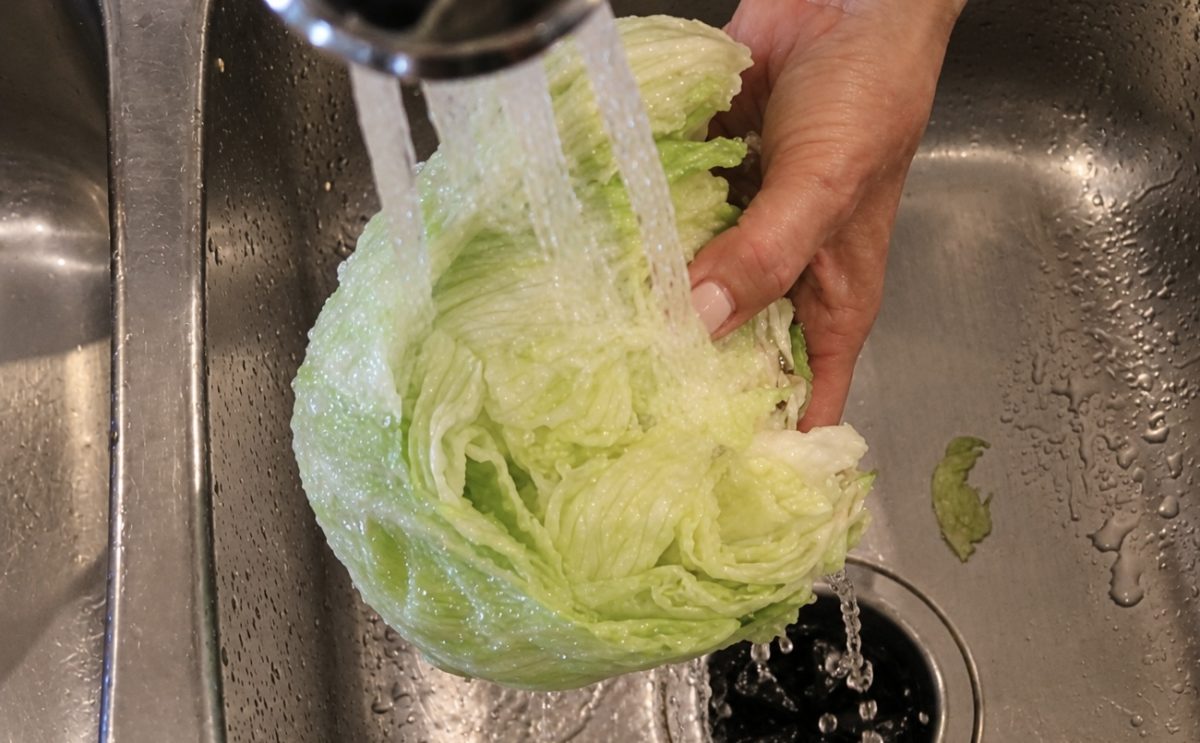
The CDC recommends washing produce under running water before eating, cutting or cooking it. However, washing produce does not guarantee that Cyclospora will be removed, making awareness of active recalls especially important.
Liebl believes staying informed is worthwhile, but becoming afraid of everything in the produce aisle is not.
“It’s worth looking at every now and again,” Liebl said. “I tell people not to become too consumed with it.”
So, when lunch bags unzip again tomorrow and salads begin their familiar shaking across Founder’s Hall, there is no need to fear the greens. Instead, this summer’s outbreak offers a reminder to know where our food comes from, pay attention to recalls and understand what may be hiding inside something as ordinary as a leaf of lettuce.
Maybe our lunches deserve that second thought after all.