


This past July, Olivia Burr ‘27 spent a week at NASA Glenn Research Center in Ohio as part of the NASA Glenn High School Engineering Institute, gaining experience with engineering projects and learning from NASA engineers and researchers.
The week-long program gave students the opportunity to complete engineering projects curated by NASA engineers. Students also toured NASA facilities, learned from NASA Glenn engineers and presented projects.
According to NASA Glenn’s website, the institute stated that students worked with technical experts and tested prototypes involving jet-engine noise, power systems and simulated lunar operations.
The program is competitive. More than 700 students applied to the program and only 65 were accepted, according to Burr.
Burr has been interested in NASA for many years. “I have wanted to work for NASA since I was in the fourth grade,” she said.
She discovered the institute while looking through NASA’s website. Burr said she wanted to gain hands-on experience and learn more about engineering before college.
Burr was unsure about applying because she thought she would not be accepted. She was encouraged to apply anyway.
When she received her acceptance email, she said she was overwhelmed with excitement. “I started sobbing, I was so excited,” Burr said.
“I was very excited for Olivia to be exposed to such a cool environment and such interesting people,” said her father, Ted Burr. “We were really happy she put herself out of her comfort zone and got to learn more about what she is passionate about,” her mother, Julie Burr, added.
During the program, Burr worked on several projects related to aerospace engineering. The program focused on areas such as aircraft propulsion, power systems and communication technology.
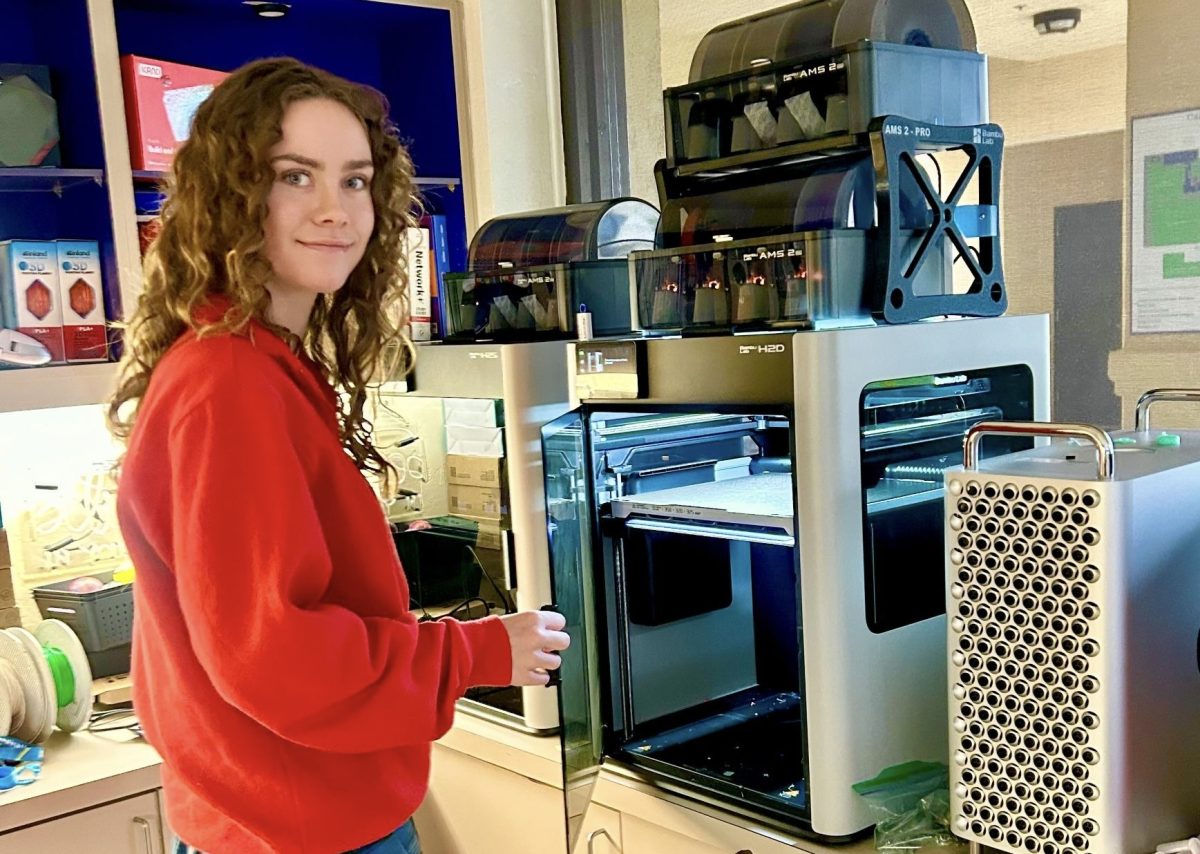
One of Burr’s projects focused on sound-damping technology for jet engines. Students worked with engineering concepts used in aerospace. Burr also worked on a simulated lunar rover. Students designed the rover’s wheels, tested traction, used computer-aided design, 3D-printed parts and built the rover’s structure. The project also involved wiring, powering and coding the rover before testing it. “It was very similar to the projects that we saw inside of a lab at NASA,” Burr said.
During the program, Burr toured NASA facilities, including a supersonic wind tunnel and a microgravity facility located about 450 feet underground. Seeing the facilities gave her a closer look at the amount of testing involved in aerospace engineering.
Burr worked with three other students from Washington, Ohio and Texas. She said it was difficult to find a common ground and share ideas with people who had different perspectives.
Being one of the few girls participating in the program, Burr found it challenging to make sure her ideas were heard. The experience also influenced Burr’s plans for college. She plans to study mechanical engineering and may add an aerospace engineering minor.
In the future, Burr hopes to find more opportunities with NASA or within the aerospace industry. She would advise students interested in similar opportunities to put themselves out there and not let other opinions discourage them.