



Xavier students usually don’t think twice about how long they leave the faucet running in the morning or the effects of taking 30-minute showers. Many don’t understand the reasons behind Arizona’s ongoing struggle with water. As one of the driest states in the country, Arizona continues to face growing concerns about its limited water supply.
To understand the Arizona water crisis, it is critical to know what Arizona’s water sources are. Brian McNerney, Honors Chemistry teacher at Xavier, explains how Arizona has different sources of water: “The first is groundwater, which makes up 41% of water; reclaimed water, which is 5%; the Salt and Verde Rivers, which give about 18% of the water; and the remaining 36% of Arizona’s water comes from the Colorado River.”
This drought stretches across Arizona. The Colorado River is shrinking in its water supply due to climate change, and the state itself has been in a drought for 26 years.
Since Arizona was not the only state affected by water shortages, additional agreements had to be put in place. However, when negotiations between states failed, the federal government stepped in, resulting in Arizona facing a 30% reduction in its Colorado River water supply beginning in 2028.
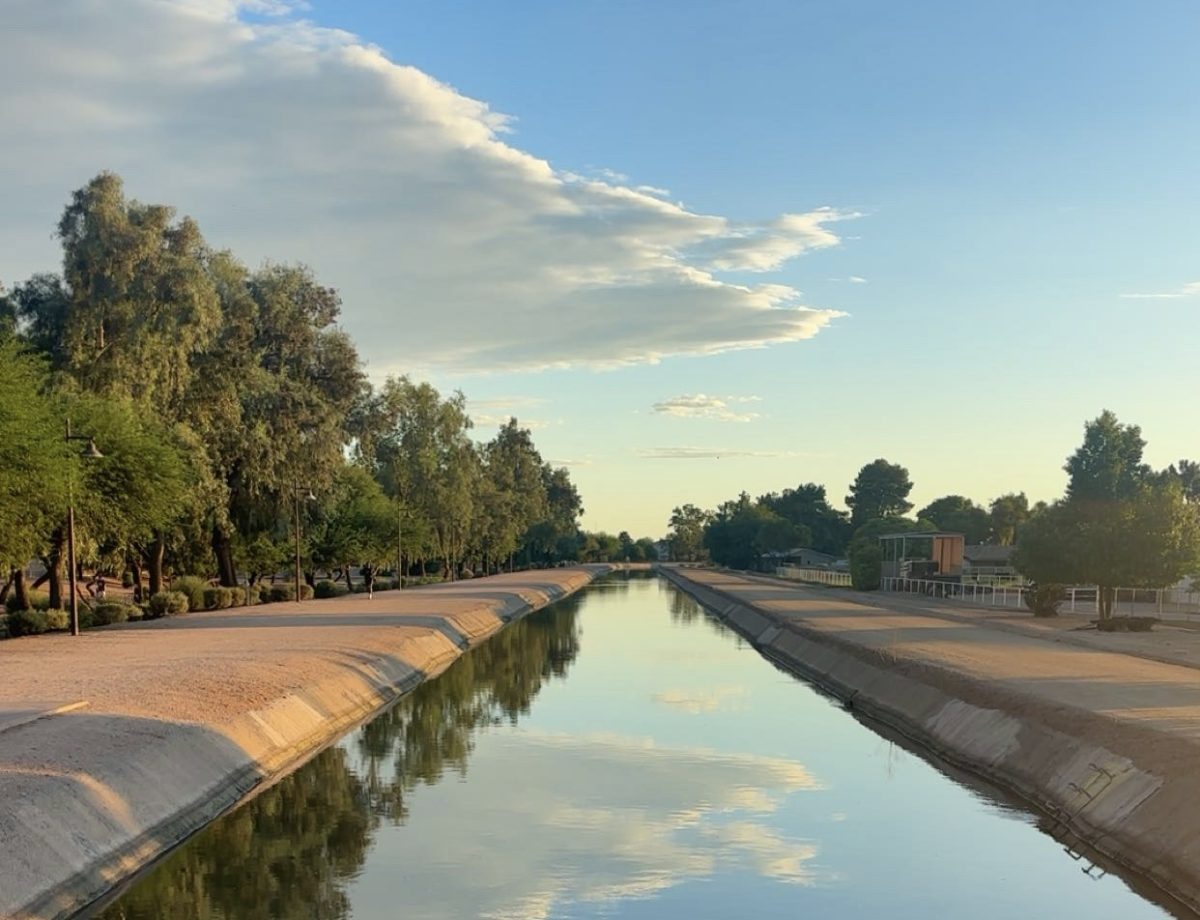
The Colorado River has supplied water through Arizona’s canal system since the1960s, with the system costing approximately $4 billion.
Additionally, with less water in canals, living costs will be more expensive for Arizona residents.
For many Arizona residents, this could mean significantly higher water bills in the coming years, particularly for households that use large amounts of water.
According to Sarah Schimmp, a biology and AP Environmental Science teacher at Xavier, “Approximately 70% of our water goes to irrigation, 10% to households and 20% to replete aquifers.”
The majority of Arizona’s water is used for agriculture, 10% is used by households for everyday needs such as sinks and showers, and the remaining 20% is stored underground.
However, not all the water stored underground is currently being used. According to Nicole Mabante, a chemistry and AP Chemistry teacher at Xavier, “There is water underneath the city of Phoenix that is not being used because it is being saved for another drought in the future.”
Arizona continues to take precautions to ensure a reliable water supply for residents, now and in the future.
McNerney explained that Arizona is developing three treatment plants designed to process wastewater and recycled water, making it safe enough to be reused by drinking communities.
Government and treatment plants would have to make this wastewater go through different types of processes just to obtain water safe enough for the community, and that process takes time and money.
Ultimately, Arizona officials recognize the need for a reliable supply and are continuing to search for solutions to meet the state’s growing demand.
Although these solutions will require time and funding, they could help Arizona support its growing population and secure a more sustainable water supply for future generations.